
Content marketing metrics are essential in today’s digital landscape where every click and interaction can influence business success. Surprisingly, many marketers still overlook the power of these metrics. In fact, according to the Content Marketing Institute, 72% of successful content marketers use specific conversion metrics to measure ROI. This shows that understanding how your content performs goes beyond vanity metrics; it can directly drive revenue and growth. By harnessing advanced measurement techniques, you can turn numbers into actionable insights that enhance your content strategy and publishing and connect more effectively with your audience.
Table of Contents
- Why Content Marketing Metrics Are Important
- Key Website And Traffic Metrics
- Measuring Audience Engagement And Reach
- Tracking Conversion And Business Outcomes
Quick Summary
| Takeaway | Explanation |
|---|---|
| Importance of Content Marketing Metrics | Content marketing metrics provide essential insights that drive strategic decision-making, turning abstract strategies into measurable results that align with business objectives. |
| Key Traffic and Engagement Metrics | Traffic volume, engagement rates, and conversion metrics are crucial for understanding audience interactions and optimizing content strategies for better performance. |
| Audience Engagement and Reach Measurement | Metrics such as social media impressions and unique visitors help quantify brand awareness and assess the potential impact of content on target markets. |
| Conversion Tracking for Business Outcomes | Tracking conversion metrics like lead generation and sales revenue transforms content into a measurable business driver, demonstrating its economic value and impact on organizational goals. |
| Integration of Metrics for Continuous Improvement | Continuously analyzing and integrating various metrics allows marketers to refine content strategies, identify high-performing content, and optimize resource allocation effectively. |
Why Content Marketing Metrics Are Important
In the rapidly evolving digital landscape, content marketing has become more than just creating compelling narratives—it’s about understanding precisely how those narratives perform and impact business objectives. Content marketing metrics transform abstract content strategies into measurable, actionable insights that drive strategic decision-making.
Understanding the Strategic Value of Content Metrics
Content marketing metrics are not mere numbers; they are the diagnostic tools that reveal the true health and effectiveness of your content strategy. These metrics provide a comprehensive view of how your content resonates with target audiences, generates engagement, and contributes to broader business goals. Without robust measurement, content marketing becomes a shot in the dark—expensive, uncertain, and potentially ineffective.
According to Content Marketing Institute, 73% of marketers emphasize the importance of tracking content that addresses current challenges and trends. This statistic underscores the critical need for precise, data-driven measurement to ensure content remains relevant and impactful.
Quantifying Content Performance and Business Impact
Traditionally, marketing teams struggled to demonstrate the tangible value of content. Content marketing metrics bridge this gap by providing clear, quantifiable evidence of content’s contribution to business outcomes. By tracking key performance indicators (KPIs), organizations can:
- Measure Engagement: Understand how audiences interact with content through metrics like time on page, social shares, and comments
- Assess Lead Quality: Connect content performance directly to lead generation and conversion rates
- Optimize Resource Allocation: Identify which content types and channels deliver the highest return on investment
Global Banking and Finance research reveals that high engagement levels are associated with 75% better lead quality. This demonstrates how content marketing metrics do more than track performance—they provide strategic insights that directly impact business growth.
The Competitive Advantage of Advanced Measurement
In today’s data-driven marketing environment, organizations that master content marketing metrics gain a significant competitive edge. Advanced measurement allows for hyper-personalization and continuous improvement. By analyzing detailed metrics, marketers can:
- Understand audience preferences with unprecedented precision
- Create more targeted, resonant content experiences
- Adapt strategies quickly based on real-time performance data
Importantly, research indicates that hyper-personalized content can increase engagement rates by 202%, with 80% of marketers reporting higher conversion rates from personalization strategies.
Content marketing metrics are no longer optional—they are essential. They transform content from a creative exercise into a strategic, measurable business function that delivers demonstrable value. By embracing comprehensive measurement, organizations can ensure their content marketing efforts are not just creative, but genuinely effective and aligned with overarching business objectives.

Key Website and Traffic Metrics
Website and traffic metrics serve as the foundational indicators of content marketing performance, providing critical insights into how audiences discover, interact with, and engage with digital content. Understanding these metrics enables marketers to make data-driven decisions that optimize content strategy and improve overall digital presence.
Traffic Volume and Source Analysis
Traffic metrics offer a comprehensive view of content reach and audience acquisition. By examining how visitors find and interact with content, marketers can develop more targeted strategies. Analytify highlights that organic search traffic remains a crucial metric in 2025, measuring visitors who discover websites through unpaid search engine results and evaluating SEO effectiveness.
Key traffic metrics to monitor include:
- Total Website Visitors: The overall number of people arriving at your site
- Traffic Sources: Understanding whether visitors come from organic search, social media, direct visits, or referral links
- New vs. Returning Visitors: Assessing audience loyalty and content’s ability to attract fresh audiences
Sixth City Marketing research reveals that content marketing generates 3x more leads compared to outbound marketing while costing 62% less, underscoring the importance of tracking traffic metrics comprehensively.
Engagement and Interaction Metrics
Beyond raw traffic numbers, engagement metrics provide deeper insights into content quality and audience interaction. These metrics help determine how effectively content captures and maintains audience attention. Critical engagement metrics include:
- Average Time on Page: Indicates how long visitors spend consuming content
- Bounce Rate: Measures the percentage of visitors who leave after viewing only one page
- Page Views per Session: Reveals how many pages a visitor explores during a single website visit
Interestingly, research shows that 83% of marketers believe creating higher-quality content less frequently is more effective than publishing lower-quality content more often. This insight emphasizes the importance of tracking qualitative engagement metrics alongside quantitative traffic data.
Conversion and Performance Tracking
Ultimately, website metrics should connect to broader business objectives. Conversion metrics transform traffic data into actionable business intelligence. These metrics help determine how effectively content drives desired user actions, such as:
- Conversion Rate: Percentage of visitors completing a specific goal
- Lead Generation: Number of potential customers captured through content
- Goal Completions: Tracking specific actions like newsletter sign-ups, downloads, or purchases
By systematically analyzing these website and traffic metrics, marketers can develop a nuanced understanding of content performance. This data-driven approach allows continuous refinement of content strategies, ensuring that digital assets consistently deliver value and support overarching business goals.
Effective measurement is not about collecting numbers, but interpreting them to create more resonant, impactful content experiences that genuinely connect with target audiences.
Measuring Audience Engagement and Reach
Audience engagement and reach are critical dimensions of content marketing that transform passive content consumption into meaningful interactions. By systematically measuring how audiences discover, interact with, and respond to content, marketers can develop more targeted, resonant strategies that drive genuine connection and business growth.
Quantifying Audience Reach and Brand Awareness
Reach metrics provide insights into the breadth of content visibility and potential audience impact. CropInk research reveals that 87% of marketers successfully increased brand awareness through content marketing, highlighting the strategic importance of comprehensive reach measurement.
Key reach metrics include:
- Social Media Impressions: Total number of times content is displayed
- Unique Visitors: Distinct individuals accessing your content
- Geographic Distribution: Understanding audience location and demographic spread
- Potential Audience Size: Estimated number of people who could potentially view content
By tracking these metrics, marketers can assess content’s potential to penetrate target markets and expand brand visibility.
Evaluating Content Interaction and Depth of Engagement
Engagement metrics go beyond surface-level visibility, measuring the quality and intensity of audience interactions. These metrics reveal how compelling and valuable content truly is. Critical engagement indicators include:
- Social Shares: Number of times content is redistributed across platforms
- Comments and Discussions: Depth of audience interaction and conversation generation
- Video Watch Time: Duration and completion rates for video content
Research shows that 87% of consumers have been convinced to buy from a brand after watching a video, underscoring the importance of tracking video engagement metrics meticulously.
Advanced Engagement Measurement Techniques
Modern content marketing demands sophisticated measurement approaches that capture nuanced audience behaviors. Advanced techniques include:
- Sentiment Analysis: Understanding emotional responses to content
- Conversion Path Tracking: Mapping how content influences user journeys
- Interaction Depth Scoring: Developing comprehensive engagement indexes
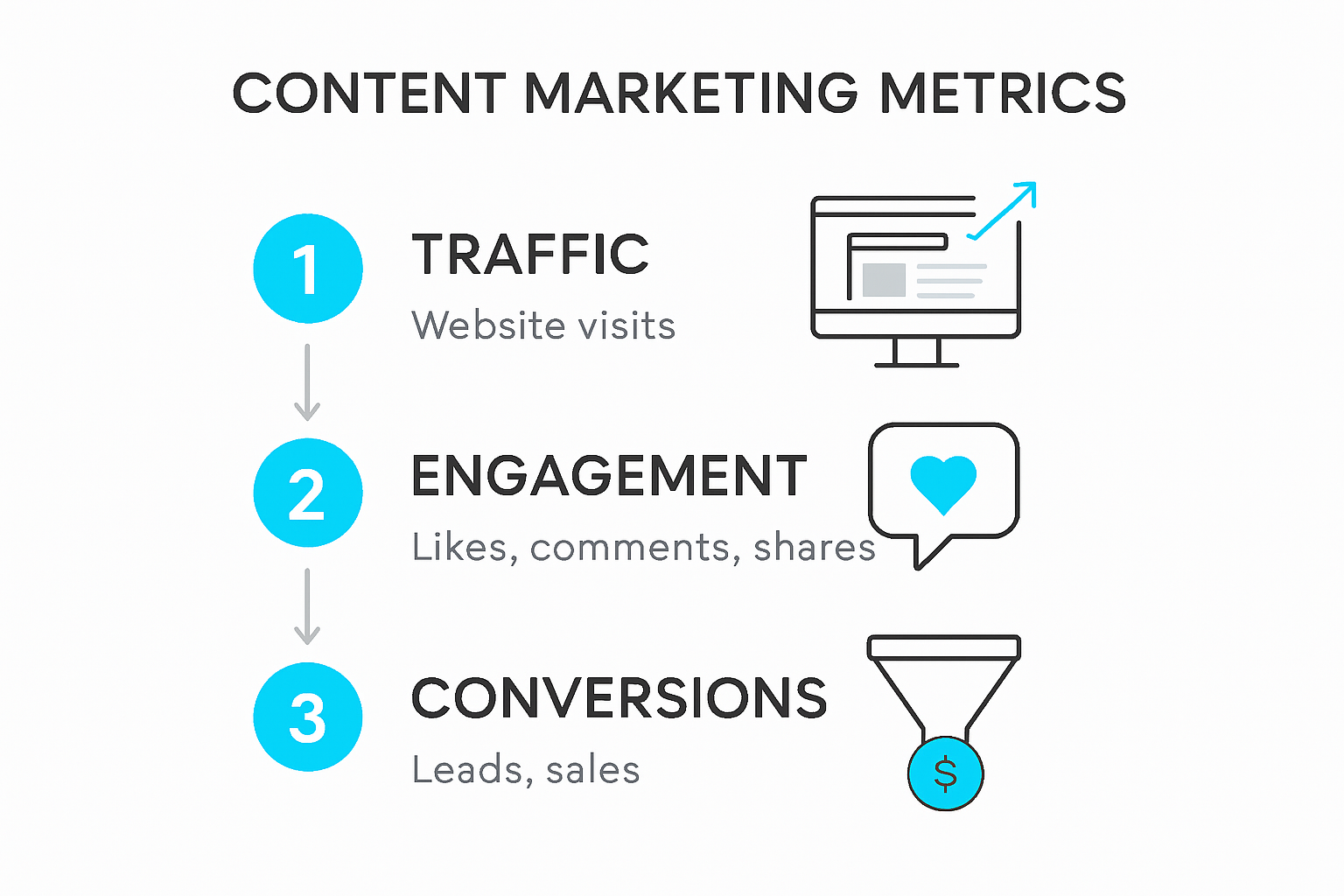
Analytify insights emphasize that organic search traffic provides critical information about user intent and content effectiveness. By correlating reach, engagement, and conversion metrics, marketers can develop holistic views of content performance.
Measuring audience engagement and reach is not about collecting overwhelming data, but extracting actionable insights that continuously refine content strategies. The most successful marketers view these metrics as dynamic tools for understanding audience needs, preferences, and behaviors—transforming raw numbers into strategic intelligence that drives meaningful connections and business growth.
Tracking Conversion and Business Outcomes
Converting content marketing efforts into tangible business outcomes represents the ultimate measure of strategic success. Beyond engagement and reach, conversion tracking transforms content from a creative exercise into a measurable business driver that directly impacts revenue, growth, and organizational objectives.
Understanding Conversion Metrics and Business Impact
Conversion metrics bridge the gap between content performance and business results, providing clear evidence of content marketing’s economic value. Content Marketing Institute research reveals that 72% of the most successful content marketers measure ROI using specific conversion metrics like leads, sales, and revenue generation.
Key conversion metrics to track include:
- Lead Generation: Number and quality of potential customers acquired
- Conversion Rate: Percentage of visitors completing desired actions
- Sales Revenue: Direct financial impact attributable to content
- Customer Acquisition Cost: Efficiency of content in generating new business
These metrics transform content from an abstract marketing activity into a quantifiable business strategy with direct economic implications.
Strategic Conversion Tracking Approaches
Effective conversion tracking requires sophisticated, multi-dimensional measurement techniques. Marketers must develop comprehensive frameworks that connect content interactions with tangible business outcomes. Advanced tracking approaches include:
- Conversion Path Analysis: Mapping user journeys from initial content engagement to final purchase
- Attribution Modeling: Understanding which content pieces contribute most to conversions
- Lifetime Value Tracking: Measuring long-term customer value generated through content
Research indicates that 87% of consumers have been convinced to make a purchase after engaging with branded content, underscoring the direct connection between strategic content marketing and business conversions.
Integrating Conversion Metrics into Broader Strategy
Successful conversion tracking is not merely about collecting data, but developing actionable insights that continuously refine content strategies. By systematically analyzing conversion metrics, organizations can:
- Identify high-performing content types and topics
- Optimize content for specific stages of the customer journey
- Allocate resources more effectively based on proven performance
- Demonstrate clear return on content marketing investments
Converting content marketing metrics into meaningful business intelligence requires a holistic approach that goes beyond surface-level measurements. The most effective strategies view conversion tracking as a dynamic process of continuous learning and optimization, enabling organizations to create increasingly targeted, impactful content experiences that directly drive business growth.
Frequently Asked Questions
What are the key content marketing metrics to track in 2025?
Key metrics include traffic volume, engagement rates, conversion rates, lead generation, and audience reach. These metrics help evaluate the effectiveness of content in driving business outcomes.
Why is it important to measure content marketing metrics?
Measuring content marketing metrics provides actionable insights that connect content strategy to business goals, helping marketers optimize their efforts and demonstrate ROI effectively.
How can I measure audience engagement in my content marketing?
Audience engagement can be measured through metrics such as average time on page, bounce rate, social shares, comments, and video watch time, which indicate how well content resonates with viewers.
What role do conversion metrics play in content marketing?
Conversion metrics are crucial as they quantify the direct impact of content on business results, by tracking leads, sales revenue, and overall conversion rates, demonstrating the economic value of content marketing.
Unlock Your Content’s True Potential with Real-Time Metrics
In the fast-paced world of digital marketing, tracking content marketing metrics effectively can feel like navigating a maze. As discussed in the article, measuring engagement, conversion rates, and audience reach isn’t just about collecting data—it’s about transforming that data into actionable insights that can drive business success. But what happens when the process of reporting those metrics becomes a burden instead of a revelation?
Enter Reportz.io. Our SaaS platform transforms the way marketers handle their data, allowing you to create customizable KPI dashboards that automatically aggregate performance metrics from multiple channels. Imagine having all your critical insights at your fingertips—set up a report in under three minutes and share it effortlessly with your clients and team. No more sifting through disparate data sets or wasting hours on report generation.
Why wait to gain the competitive edge your content deserves? Start tracking your content marketing metrics with precision today! Visit Reportz.io to create your personalized dashboard and take command of your reporting like never before! Act now and begin transforming insights into impactful strategies.
Recommended Articles
- Updates and Fixes we’ve Made to Reportz Over the Last Several Months – Reportz
- How to Set KPIs in 2025: A Clear, Step-by-Step Guide – Reportz
- 5 Ways Marketing Performance Tracking Boosts Your ROI – Reportz
- Your Comprehensive White Label SEO Report Guide 2025 – Reportz
- ‘The Trustmaker’ Is A Freemium Social Proof Tool That Will Quickly Boost Your Conversion Rates – Reportz