
The future of marketing reporting is poised for a dramatic overhaul. By 2025, generative AI is projected to integrate into enterprise software, potentially unlocking around $10 billion in revenue uplift for marketers. But here’s the kicker: while many expect AI to dominate the analytics landscape, the true game-changer may lie in how reporting evolves to embrace personalization. This shift is about more than just data; it’s about crafting tailored insights that resonate with diverse audiences, transforming reporting from a static summary into a dynamic strategy driver.
Table of Contents
- Key Trends Shaping Marketing Reporting
- Essential Tools For The Future Of Reporting
- Challenges And Opportunities In Modern Reporting
- Building A Future-Ready Reporting Strategy
Quick Summary
| Takeaway | Explanation |
|---|---|
| AI and Automation Transform Reporting | Generative AI is set to integrate into enterprise software by the end of 2024, enabling marketers to automate complex data analysis and generate real-time insights, fundamentally changing consumer behavior understanding. |
| Personalization is Essential | Companies focusing on personalization are surpassing revenue goals; marketing reporting must evolve to include demographic-specific metrics and adapt to shifting consumer preferences. |
| Integrated Reporting for Comprehensive Insights | Breaking down data silos to create holistic, cross-channel reporting is crucial for understanding overall marketing performance and enabling proactive decision-making. |
| Addressing Data Measurement Challenges | 41% of marketers face difficulties measuring performance across channels, necessitating innovative strategies like Marketing Mix Modeling to gain accurate insights into ROI. |
| Building Ethical Data Frameworks | Future-ready reporting strategies must prioritize transparency and ethical data practices to establish trust with consumers, essential for Millennial and Gen Z audiences. |
Key Trends Shaping Marketing Reporting
The future of reporting in marketing is undergoing a radical transformation, driven by technological innovations, changing consumer expectations, and the need for more intelligent, data-driven decision-making. Marketing professionals are witnessing a seismic shift in how data is collected, analyzed, and utilized to drive strategic insights.
AI and Automation: Revolutionizing Marketing Intelligence
Generative AI is becoming a game-changing force in marketing reporting. Deloitte Digital reports that enterprise software is expected to integrate AI capabilities by the end of 2024, potentially generating approximately $10 billion in revenue uplift. This technological leap means marketing teams can now:
- Automate complex data analysis with unprecedented speed and accuracy
- Generate real-time predictive insights that were previously impossible
- Create personalized reporting frameworks tailored to specific business needs
The integration of AI doesn’t just streamline reporting—it transforms how marketers understand and predict consumer behavior. Machine learning algorithms can now detect subtle patterns in data that human analysts might overlook, providing a more nuanced view of marketing performance.
Personalization: The New Reporting Imperative
Consumer expectations are driving a fundamental reimagining of marketing reporting. Deloitte research highlights that companies excelling in personalization are significantly outperforming their revenue goals. This trend is reshaping reporting methodologies, compelling marketers to develop more granular, audience-specific insights.
The emerging reporting landscape prioritizes:
- Demographic-specific performance metrics
- Hyper-targeted audience segmentation
- Dynamic reporting that adapts to changing consumer preferences
With market data showing that 70% of marketers are targeting Millennials in 2025, reporting tools must become increasingly sophisticated in tracking generational nuances and behavioral shifts.
Integrated and Holistic Reporting Approaches
Modern marketing reporting is moving beyond siloed data collection. The future demands comprehensive, cross-channel insights that provide a 360-degree view of marketing performance. This means breaking down traditional barriers between digital channels, integrating data from social media, email marketing, paid advertising, and customer relationship management systems.
Successful marketing teams will leverage reporting tools that offer:
- Unified dashboards displaying interconnected metrics
- Real-time data synchronization across platforms
- Predictive analytics that forecast future performance trends
The goal is no longer just to report what happened, but to provide actionable intelligence that drives strategic decision-making. Marketing reporting is evolving from a retrospective exercise to a forward-looking, predictive discipline that directly impacts business growth and customer engagement. 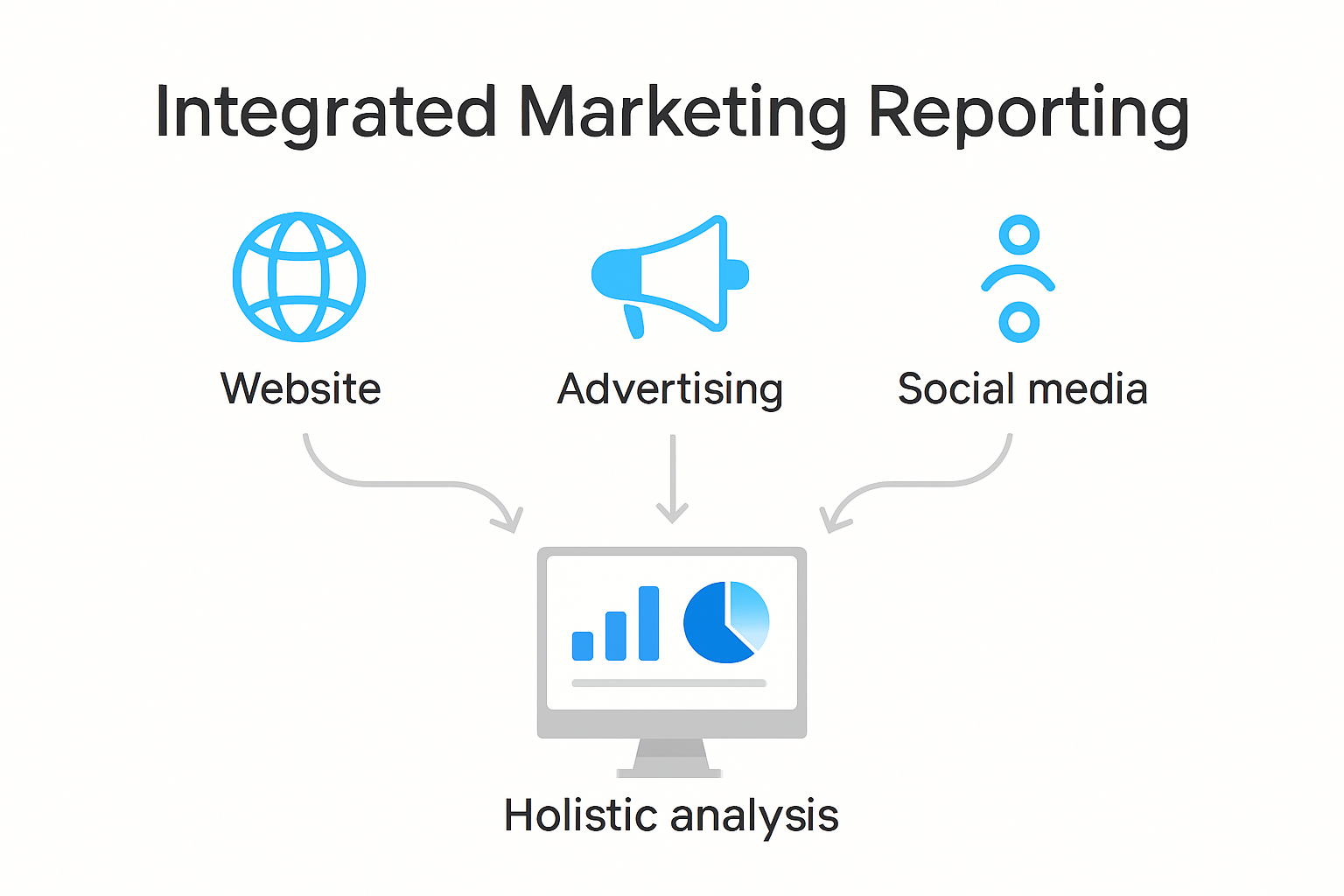
As technology continues to advance, marketing reporting will become more intelligent, more personalized, and more critical to organizational success. The teams that embrace these emerging trends will be best positioned to navigate the complex and dynamic marketing landscape of the future. 
Essential Tools for the Future of Reporting
The landscape of marketing reporting is rapidly evolving, demanding sophisticated tools that transform raw data into strategic insights. Modern marketers require robust platforms that not only collect information but also provide intelligent, actionable analysis across multiple dimensions.
Data Visualization and Analytics Platforms
Google Looker Studio has emerged as a critical tool for marketing professionals seeking comprehensive data visualization capabilities. By offering intuitive interfaces and powerful integration features, it enables marketers to create dynamic, interactive dashboards that communicate complex information quickly and effectively.
Key features that make data visualization tools essential include:
- Real-time data tracking across multiple marketing channels
- Customizable reporting templates
- Advanced visual representation of performance metrics
Companies are increasingly recognizing that visual storytelling through data transforms complex analytics into understandable narratives. Nielsen’s 2025 Annual Marketing Report emphasizes how visual data interpretation helps organizations make faster, more informed decisions.
Performance and SEO Tracking Tools
Marketers now require specialized tools that provide granular insights into digital performance. SEMrush represents a prime example of a comprehensive platform that delivers multi-dimensional marketing intelligence. These advanced tools offer:
- Detailed competitive analysis
- Keyword performance tracking
- Content optimization recommendations
- Comprehensive digital marketing performance metrics
SEO and performance tracking tools have become indispensable for understanding digital ecosystem dynamics. They provide marketers with the ability to benchmark performance, identify opportunities, and make data-driven strategic adjustments.
Integrated Marketing Intelligence Platforms
The future of reporting demands platforms that seamlessly integrate data from multiple sources. Modern marketing intelligence solutions like Google Analytics now provide comprehensive views of customer interactions across digital touchpoints.
These integrated platforms deliver:
- Cross-channel performance analysis
- Audience segmentation insights
- Predictive behavior modeling
- Attribution modeling for marketing investments
By breaking down traditional data silos, these tools enable marketers to understand complex customer journeys and optimize marketing strategies with unprecedented precision. The ability to connect disparate data sources and generate holistic insights represents a significant leap forward in marketing intelligence.
As technology continues to advance, marketing reporting tools will become increasingly sophisticated. The most successful marketing teams will be those that strategically leverage these intelligent platforms, transforming data into compelling narratives that drive business growth and customer engagement.
Challenges and Opportunities in Modern Reporting
The future of reporting in marketing is simultaneously complex and promising, with significant challenges emerging alongside unprecedented opportunities for innovation and strategic insight. Marketing professionals must navigate an increasingly intricate landscape of data, technology, and evolving consumer expectations.
Data Measurement and Attribution Complexity
Supermetrics research reveals a critical challenge facing modern marketers: 41% struggle to effectively measure marketing performance across multiple channels. This measurement gap represents a significant obstacle in understanding true marketing impact and return on investment (ROI).
The complexity of cross-channel attribution has become a central concern, with marketers seeking more sophisticated approaches to understanding customer journeys. Key challenges include:
- Fragmented data sources
- Inconsistent tracking mechanisms
- Difficulty in establishing clear performance metrics
To address these challenges, innovative measurement strategies are emerging. Marketing mix modeling (MMM) is gaining traction, with 49% of marketers currently implementing this approach and an additional 47% planning to invest in it during 2025.
Privacy and Data Quality Challenges
The increasing adoption of AI and advanced reporting technologies brings unprecedented challenges in data privacy and quality. Market research indicates that consumer data privacy concerns and data quality issues are becoming critical considerations for marketing teams.
Key privacy and data challenges include:
- Navigating increasingly strict data protection regulations
- Maintaining consumer trust while collecting actionable insights
- Ensuring data accuracy and reliability in AI-driven reporting
Successful marketing teams will need to develop robust strategies that balance sophisticated data collection with ethical considerations and transparent data practices.
Strategic Opportunities in Advanced Reporting
Despite the challenges, modern reporting presents extraordinary opportunities for organizations willing to innovate. The integration of predictive analytics, AI-driven insights, and comprehensive measurement techniques opens new frontiers for strategic marketing intelligence.
Emergent opportunities include:
- Predictive performance modeling
- Real-time adaptive reporting
- Hyper-personalized consumer insights
Marketers who can effectively leverage these advanced reporting techniques will gain significant competitive advantages. The ability to transform complex data into actionable strategies represents the new frontier of marketing intelligence.
The future of reporting is not about collecting more data, but about creating meaningful, actionable insights that drive strategic decision-making. Organizations that embrace this philosophical shift—viewing reporting as a strategic asset rather than a compliance exercise—will be best positioned to thrive in the evolving marketing landscape.
As technology continues to advance and data becomes increasingly sophisticated, the most successful marketing teams will be those that can elegantly balance technological capability with human insight, creating reporting frameworks that are both intelligent and intuitive.
Building a Future-Ready Reporting Strategy
Creating a robust, adaptable reporting strategy is no longer a luxury but a critical necessity for marketing teams navigating the complex digital landscape. The future of reporting demands a holistic approach that seamlessly integrates technology, data intelligence, and strategic vision.
Technological Infrastructure and AI Integration
Deloitte Digital research highlights the transformative potential of generative AI, with enterprise marketing software expected to integrate AI capabilities by the end of 2024. This technological revolution represents a fundamental shift in how marketing teams approach reporting and strategic decision-making.
Key considerations for technological infrastructure include:
- Scalable cloud-based reporting platforms
- Modular AI-powered analytics systems
- Flexible data integration capabilities
Successful organizations will prioritize technological solutions that offer not just data collection, but intelligent interpretation and predictive insights. The goal is to move beyond retrospective reporting toward proactive, anticipatory marketing intelligence.
Data Privacy and Ethical Reporting Frameworks
Market research indicates that emerging digital audiences, particularly Millennials and Gen Z, demand transparency and ethical data practices. Building a future-ready reporting strategy requires a nuanced approach that balances technological capability with robust privacy protections.
Critical elements of an ethical reporting framework include:
- Transparent data collection methodologies
- Comprehensive consent management
- Clear communication about data usage
- Proactive privacy protection mechanisms
Marketers must develop reporting strategies that not only comply with evolving regulations but also build trust with increasingly sophisticated consumer audiences.
Strategic Alignment and Continuous Learning
A future-ready reporting strategy transcends technological implementation. It requires a holistic approach that aligns reporting capabilities with broader organizational objectives and maintains a commitment to continuous learning and adaptation.
Key strategic priorities include:
- Regular technology and skills assessment
- Cross-functional reporting collaboration
- Ongoing team training in emerging technologies
- Adaptive reporting methodologies
The most successful marketing teams will view reporting not as a static process, but as a dynamic, evolving discipline. This means investing in team skills, remaining open to technological innovations, and maintaining a flexible approach to data interpretation.
Building a future-ready reporting strategy is ultimately about creating an ecosystem of intelligence—one that combines cutting-edge technology, ethical data practices, and human insight. As the marketing landscape continues to evolve, organizations that can balance technological sophistication with strategic vision will be best positioned to transform data into meaningful, actionable intelligence.
The future of marketing reporting is not about collecting more data, but about creating more intelligent, more human connections between information, strategy, and business growth.
Frequently Asked Questions
What is the role of AI in the future of marketing reporting?
Generative AI is set to transform marketing reporting by automating complex data analysis and generating real-time insights, which allows marketers to understand consumer behavior more deeply.
How is personalization changing marketing reporting?
Personalization is becoming essential in marketing reporting as companies focus on demographic-specific metrics and hyper-targeted audience segmentation to adapt to evolving consumer preferences.
What tools are essential for future marketing reporting?
Key tools for future marketing reporting include data visualization platforms, SEO tracking tools, and integrated marketing intelligence platforms that provide comprehensive insights and real-time performance analysis.
What are the main challenges in modern marketing reporting?
Main challenges include measuring performance across multiple channels, maintaining data privacy, and ensuring data quality amidst the complexity of customer journeys and attribution modeling.
Elevate Your Marketing Reporting to Future Standards with Reportz.io
As the landscape of marketing reporting shifts towards advanced personalization and automation, many marketers face the challenge of sifting through complex data to derive actionable insights. The article underscores how traditional reporting methods are becoming increasingly ineffective against the rising demands for real-time, audience-specific metrics. Missing out on using powerful tools can lead to a fragmented understanding of marketing performance, which is a situation no innovative marketer wants to be in.
Imagine a solution that streamlines your reporting process, allowing you to create customizable KPI dashboards in under three minutes. With Reportz.io, you can integrate multiple data sources seamlessly, providing you with a holistic view of your marketing activities all in one place. No more juggling between different analytics tools or struggling with data silos—our platform puts everything you need for dynamic, engaging, and personalized reporting at your fingertips.
Ready to transform your reporting strategy into a key driver for decision-making? Don’t let outdated methods hold you back. Start your journey today at Reportz.io and experience the power of dynamic reporting that aligns with the future of marketing.
Recommended Articles
- Top Resources & Communities for Digital Agency Owners & Entrepreneurs – Reportz
- 7 Tips for Customizing Your Marketing ROI Dashboard – Reportz
- Breaking Down Display Advertising Analytics: Metrics That Matter – Reportz
- La guía definitiva para automatizar los informes de marketing – Reportz
- How to Create Dashboards in 2025: A Simple Guide – Reportz