
Digital marketing is about to shift in ways most people never see coming. Global digital advertising spend is on track to top 765 billion dollars in 2025, with social media ads alone hitting 267 billion dollars. That sounds like an open road for growth, right? Except now, just playing with new tools is not enough. The most successful marketers will connect advanced data interpretation with real human understanding, creating experiences that feel personal at scale. Here’s what really sets the winners apart in this rapidly changing market.
Table of Contents
- Understanding The 2025 Digital Marketing Landscape
- Essential Tools And Channels For Success
- Building Effective Reporting And Analytics Workflows
- Overcoming Challenges: Tips For Agencies And Freelancers
Quick Summary
| Takeaway | Explanation |
|---|---|
| Strategic Adaptation is Essential | Marketers must embrace integrated strategies that connect multiple digital touchpoints, requiring advanced data interpretation skills and ethical data practices to stay competitive in 2025. |
| Utilization of AI and Automation | Marketers should leverage AI-driven tools for hyper-targeted personalization and conversion optimization, enhancing their ability to respond to consumer needs swiftly and effectively. |
| Importance of Centralized Data | Establishing a centralized data repository is crucial for accurate performance measurement and consistent reporting, enabling marketers to derive actionable insights from their analytics. |
| Value-Driven Business Development | Agencies and freelancers need to pivot from traditional sales methods to value-driven consultation models that highlight measurable outcomes and foster strong client partnerships. |
| Continuous Learning and Technological Proficiency | The most successful professionals will continuously upgrade their skills in emerging technologies and maintain a flexible approach to adapt to the evolving digital landscape. |
Understanding the 2025 Digital Marketing Landscape
The digital marketing world stands at a critical transformation point in 2025. Marketers face an unprecedented ecosystem where technology, consumer behavior, and data intersect with remarkable complexity. Understanding this intricate landscape requires a strategic approach that goes beyond traditional marketing methodologies.
The Shifting Digital Ecosystem
Marketers in 2025 operate within a radically different environment compared to previous years. Global digital advertising spend is projected to increase 10.1%, reaching over $765 billion. This substantial growth signals a profound shift in how businesses allocate marketing resources.
Consumer engagement patterns have dramatically evolved. Social media platforms now serve as primary channels for brand interaction, with social media ad spend reaching $267 billion.
 Younger demographics especially are consuming content through hyperscale social video platforms, fundamentally reshaping digital media consumption.
Technology and Consumer Expectations
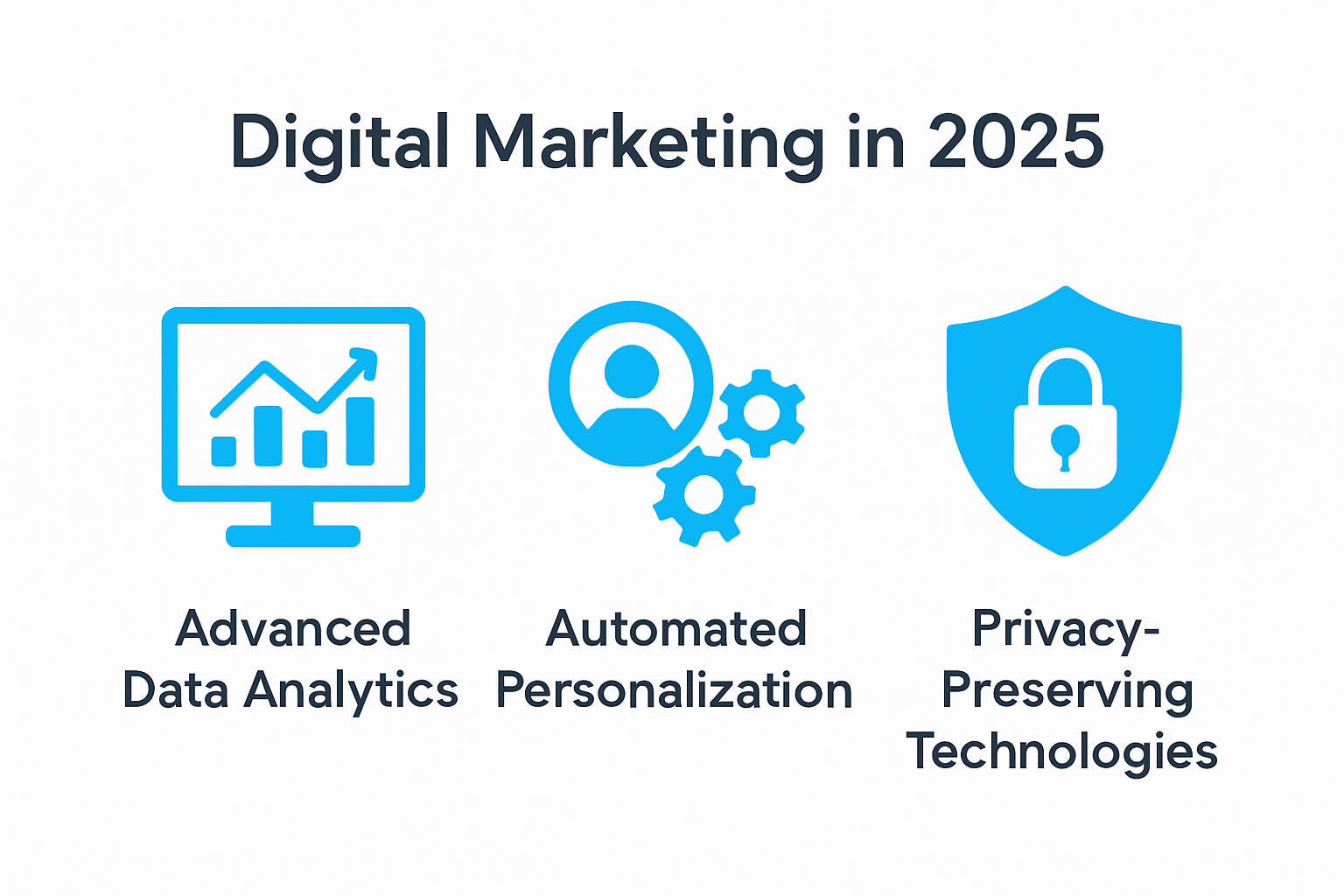
Digital marketing in 2025 demands unprecedented personalization and real time responsiveness. Artificial intelligence and machine learning technologies enable marketers to create hyper targeted experiences that anticipate consumer needs before they are explicitly expressed.
Key technological drivers include:
- Advanced data analytics providing granular consumer insights
- Automated personalization platforms that adapt messaging in milliseconds
- Privacy preserving technologies balancing personalization with data protection
Strategic Adaptation Requirements
Successful digital marketers in 2025 must develop multidimensional capabilities. This means moving beyond single channel approaches and creating integrated marketing strategies that seamlessly connect digital touchpoints.
Professionals will need to:
- Develop robust data interpretation skills
- Understand emerging technology platforms
- Create adaptive marketing frameworks
- Maintain ethical data usage practices
The digital marketing landscape is no longer about broadcasting messages but creating meaningful, contextually relevant experiences that resonate with increasingly sophisticated consumers. Agencies, freelancers, and in house marketing teams must continuously learn, experiment, and recalibrate their approaches to remain competitive.
Marketers who embrace technological innovation while maintaining a human centric approach will thrive in this complex digital ecosystem. Success depends not just on understanding tools and platforms but on developing genuine connections that transcend traditional marketing boundaries.
Essential Tools and Channels for Success
Successful digital marketing in 2025 demands a strategic arsenal of tools and platforms that enable precise targeting, efficient workflow, and measurable results. The modern marketer must navigate an increasingly complex technological ecosystem with precision and adaptability.
Social Media and Content Management
Social media platforms have transformed from simple communication channels to sophisticated marketing ecosystems. McKinsey reports that 40% of Gen Z now prefer TikTok over Google for information searching, signaling a massive shift in content consumption patterns.
Key social media management tools include:
- Hootsuite (starting at $99/month): Comprehensive platform for scheduling and analyzing social content
- Buffer (with free plan available): User friendly interface for multichannel content management
- Sprout Social: Advanced analytics and engagement tracking
These platforms enable marketers to streamline content distribution, track performance metrics, and engage audiences across multiple digital touchpoints.
Conversion and Analytics Optimization
Digital marketing success in 2025 hinges on data driven decision making. Advanced AI powered tools are revolutionizing conversion rate optimization and audience insights.
Critical conversion optimization platforms include:
- Google Optimize: AI driven insights for user behavior analysis
- Unbounce: AI powered landing page optimization
- VWO: Advanced audience segmentation for targeted testing
These tools provide granular understanding of user interactions, enabling marketers to create highly personalized experiences that drive conversions.
Emerging Technology and Integration
The most effective digital marketing strategies in 2025 leverage integrated technology ecosystems. Marketers must select tools that not only perform individual functions but also communicate seamlessly across platforms.
Essential considerations for tool selection include:
- Robust API integration capabilities
- Real time data synchronization
- Scalable infrastructure
- Privacy compliant data handling
By prioritizing interoperability and advanced technological capabilities, digital marketers can create fluid, responsive marketing systems that adapt to rapidly changing consumer behaviors.
Successful digital marketing is no longer about individual tool proficiency but about creating a cohesive technological strategy that enables rapid insight generation, personalized engagement, and measurable business impact. Professionals who master this complex integration will distinguish themselves in an increasingly competitive digital landscape.
Building Effective Reporting and Analytics Workflows
Reporting and analytics workflows represent the critical nervous system of modern digital marketing strategies. In 2025, marketers must transform raw data into actionable insights that drive strategic decision making and demonstrate tangible business value.
Data Centralization and Standardization
Effective analytics workflows begin with creating a centralized data repository that standardizes information across multiple marketing channels. This approach ensures data consistency and provides a comprehensive view of marketing performance.
Key steps for data centralization include:
- Implementing unified data collection protocols
- Establishing consistent naming conventions
- Creating standardized metric definitions
- Developing comprehensive data integration strategies
By establishing a single source of truth, marketers can eliminate data silos and create more accurate, reliable reporting mechanisms.
Performance Measurement and KPI Tracking
Precise performance tracking requires understanding critical key performance indicators that reflect genuine marketing effectiveness. Marketers should focus on metrics that demonstrate real business impact.
Crucial performance benchmarks for 2025 include:
- Click Through Rates (CTR): 6-7% for PPC campaigns
- Email Marketing Performance: 10-20% CTR for B2B newsletters
- Conversion Rates: 2-5% across digital channels
- Customer Acquisition Costs: Organic ($942), Paid ($1,907)
- SEO Return on Investment: Average 748% impact
These metrics provide a nuanced understanding of marketing performance beyond surface level engagement.
Data Quality and Continuous Improvement
Regular data audits are fundamental to maintaining analytics workflow integrity. Automated data cleaning processes help eliminate errors and improve insight quality.
Essential data quality strategies include:
- Implementing automated data validation checks
- Conducting periodic comprehensive data audits
- Establishing clear data governance frameworks
- Creating transparent error reporting mechanisms
Successful reporting workflows are not static systems but dynamic, evolving processes that continuously adapt to changing marketing landscapes. Marketers must view their analytics infrastructure as a living ecosystem requiring constant refinement and strategic attention.
The most effective digital marketing teams will treat data not as a byproduct of marketing activities but as a strategic asset. By developing robust, intelligent reporting workflows, professionals can transform complex data streams into clear, actionable strategic guidance that drives meaningful business outcomes.
Overcoming Challenges: Tips for Agencies and Freelancers
The digital marketing landscape in 2025 presents unprecedented challenges for agencies and freelancers. Success demands strategic adaptability, innovative thinking, and a proactive approach to navigating complex professional ecosystems.
Strategic Business Development
Recent survey data reveals critical challenges facing marketing professionals. New business sales remain the most significant hurdle, with 69.6% of agencies struggling to consistently generate quality leads and convert prospects.
Effective strategies for business development include:
- Developing specialized service niches
- Creating robust referral networks
- Implementing targeted digital outreach programs
- Leveraging personal brand positioning
- Demonstrating measurable client outcomes
Agencies and freelancers must shift from traditional sales approaches to value driven consultation models that showcase strategic expertise and tangible business impact.
Technological Adaptation and AI Integration
Artificial Intelligence perspectives among marketing professionals reveal a nuanced landscape. Only 12% view AI as a significant business threat, while 32% see potential disruption and opportunities for transformation.
Key technological adaptation strategies:
- Proactively learn AI tools and platforms
- Develop complementary human skills
- Create service offerings that leverage AI capabilities
- Maintain ethical technology implementation practices
- Continuously upgrade technological competencies
Successful professionals will position AI as an enhancement tool rather than viewing it as a replacement for human creativity and strategic thinking. Those who invest in advanced AI SEO solutions early will be best positioned to scale their organic growth while freeing up time for higher-level strategy.
Organizational Collaboration and Strategy Alignment
Research indicates that 42% of organizations lack a clearly defined digital marketing strategy. This fundamental gap presents significant opportunities for agencies and freelancers to differentiate themselves.
Critical collaboration approaches include:
- Breaking down organizational silos
- Developing transparent communication protocols
- Creating cross functional workflow strategies
- Implementing collaborative technology platforms
- Establishing clear performance metrics
Agencies that can help clients overcome internal communication barriers and align strategic objectives will become invaluable partners in the digital marketing ecosystem.
The most successful agencies and freelancers in 2025 will not merely provide services but act as strategic transformational partners. They will combine technological proficiency, creative problem solving, and deep understanding of business dynamics to deliver exceptional value.
Professionals who embrace continuous learning, maintain flexible service models, and demonstrate adaptability will thrive in an increasingly complex digital marketing environment. The future belongs to those who can seamlessly integrate strategic insight, technological innovation, and human creativity.
Frequently Asked Questions
What will the digital marketing landscape look like in 2025?
The digital marketing landscape in 2025 will be characterized by a focus on advanced data interpretation, integration of AI technologies, and a need for personalized consumer experiences across multiple channels.
How can agencies and freelancers adapt to the changing digital marketing environment?
Agencies and freelancers can adapt by embracing technological advancements, developing specialized service niches, and maintaining ethical practices in data usage while emphasizing strong client relationships.
What are the essential tools for digital marketing success in 2025?
Key tools include social media management platforms like Hootsuite and Buffer, conversion optimization tools like Google Optimize and Unbounce, and analytics platforms that support data centralization and integration.
Why is centralized data important for digital marketing?
Centralized data is crucial for accurate performance measurement and reporting, helping marketers to derive actionable insights and eliminate data silos for improved decision-making.
Transform Data Into Insight with Reportz.io
Navigating the complex landscape of digital marketing in 2025 calls for more than just advanced data interpretation — it’s about making that data work for you. Today’s marketers grapple with time-consuming reporting processes, lack of cohesive insights, and the pressure to deliver personalized, impactful experiences at scale. At Reportz.io, we understand that the real challenge lies in effectively aggregating and presenting data from multiple sources, allowing you to focus on what really matters: strategy and execution.
Imagine a world where you can set up customizable KPI dashboards in under three minutes and share real-time performance metrics effortlessly with your team or clients. With our platform, you can break free from the constraints of traditional reporting. Our intuitive integrations with a variety of marketing tools ensure that you’re armed with accurate data while maintaining essential privacy controls. Say goodbye to the chaos of data management!
Why wait? Elevate your digital marketing game now and start transforming raw numbers into strategic insights. Visit Reportz.io today to claim a more efficient, data-driven future. Don’t let valuable time slip away — streamline your reporting process and refocus on growth.
Recommended Articles
- 12 Tips for Creating Custom Dashboards with Your SEO Reporting Tool – Reportz
- How to Make High-Quality Marketing Reports & Dashboards – Reportz
- Reportz 2.0 is Live – More Templates and Features for Faster Reporting – Reportz
- How Can Data Visualization Reports Improve My Marketing Strategy? – Reportz
- Breaking Down Display Advertising Analytics: Metrics That Matter – Reportz