
Content marketing is rapidly evolving, and staying ahead is crucial for success. Over 70% of marketers plan to invest more in content marketing over the next few years. Yet, here’s the twist: most brands still miss the mark with their strategies. While they pump resources into creating content, many fail to connect meaningfully with their audience. The real secret? It’s not just about what you create, but how effectively you deliver solutions that resonate and engage. Get ready to explore powerful strategies that will set you apart in 2025.
Table of Contents
- Develop Your Content Marketing Plan
- Create Compelling Content That Connects
- Distribute Your Content Effectively
- Measure And Optimize Your Strategy
Quick Summary
| Takeaway | Explanation |
|---|---|
| Establish Clear Business Objectives | Define specific goals that align with your overall business strategy, as different objectives require tailored content approaches. |
| Develop a Targeted Content Strategy | Create audience personas and conduct thorough research to craft relevant content that resonates with the needs and preferences of your target audience. |
| Leverage Multichannel Distribution Strategies | Integrate owned, earned, and paid channels to maximize your content’s reach and effectiveness, ensuring strategic alignment between creation and distribution. |
| Implement Advanced Tracking and Personalization | Utilize cutting-edge tools to monitor performance metrics, enabling deeper understanding of audience interactions and the ability to optimize content strategies accordingly. |
| Continuous Optimization and Iteration | Embrace a culture of ongoing refinement by regularly reviewing metrics, experimenting with new formats, and adapting strategies based on audience feedback and data insights. |
Develop Your Content Marketing Plan
Crafting a comprehensive content marketing strategy requires deliberate planning and strategic thinking. Successful content marketing isn’t about producing random content, but creating a systematic approach that aligns with your business objectives and resonates with your target audience.
Establish Clear Business Objectives
Before diving into content creation, you must define precise goals that directly support your overall business strategy. Content Marketing Institute research reveals that many enterprise marketers rate their current content strategies as “average,” highlighting the critical need for focused planning.
Start by answering fundamental questions: What do you want to achieve? Are you looking to increase brand awareness, generate leads, drive sales, or establish thought leadership? Each goal requires a different content approach. For instance, lead generation might involve creating in-depth whitepapers and webinars, while brand awareness could focus on engaging social media content and storytelling.
Develop a Targeted Content Strategy
Understanding your audience is paramount in content marketing. Audience personas are not just demographic snapshots but comprehensive profiles that reveal motivations, challenges, and content consumption habits. Conduct thorough research to understand:
- What platforms does your target audience use?
- What type of content do they find most valuable?
- What questions are they trying to answer?
By mapping content to specific audience segments, you’ll create more relevant and engaging materials. This targeted approach ensures your content doesn’t just exist but actually connects and converts.
Implement a Data-Driven Content Audit And Optimization
Content marketing is an evolving discipline that requires continuous refinement. Research indicates that auditing existing content and identifying new opportunities through data analytics is critical for strategy optimization.
Regularly assess your content’s performance using key metrics such as:
- Engagement rates
- Conversion rates
- Time spent on page
- Social sharing
- Search engine rankings
Use these insights to understand what content resonates with your audience and where improvements are needed. This iterative process transforms your content marketing from a static strategy to a dynamic, responsive approach that continuously adapts to audience needs and market trends.
Remember, a successful content marketing plan is not about creating more content, but about creating meaningful content that serves a specific purpose and delivers genuine value to your audience. By establishing clear objectives, understanding your target market, and continuously refining your approach through data-driven insights, you’ll develop a robust content marketing strategy that drives real business results.
Create Compelling Content That Connects
In the rapidly evolving digital landscape, creating content that genuinely resonates with your audience has become more crucial than ever. Emerging research reveals that consumers are increasingly seeking engaging, personal, and actionable content that goes beyond surface-level information.
Craft Authentic and Value-Driven Narratives
Successful content marketing is no longer about producing massive quantities of material, but about delivering meaningful experiences that directly address audience challenges. Content marketing experts suggest that brands must focus on creating purpose-driven content that provides real-world solutions.
To achieve this, consider these key strategies:
- Develop content that tells a genuine story
- Address specific pain points your audience experiences
- Provide clear, actionable insights
- Demonstrate empathy and understanding
Your content should act as a bridge between your brand’s expertise and your audience’s needs. This means going beyond promotional language and instead offering substantive, helpful information that truly serves your readers.
Leverage Technology Without Losing Human Touch
Innovative brands are discovering that artificial intelligence can be a powerful tool in content creation, but not as a replacement for human creativity. The most effective approach involves using AI to enhance content efficiency while maintaining authentic human expertise and perspective.
Consider these technological integration strategies:
- Use AI for initial research and content structuring
- Implement machine learning to understand audience preferences
- Utilize data analytics to refine content strategies
- Ensure human editors provide final creative and emotional nuance
The goal is to create a symbiotic relationship between technological insights and human creativity, producing content that is both intelligent and deeply resonant.
Optimize for Engagement And Interaction

Compelling content is not a monologue but a conversation. Design your content to encourage active participation, feedback, and community building. This means creating materials that not only inform but also inspire dialogue and connection.
Key approaches to boost engagement include:
- Incorporating interactive elements like polls and quizzes
- Encouraging comments and discussions
- Creating content that prompts readers to share their own experiences
- Developing multimedia content that caters to different learning styles
Remember, the most powerful content doesn’t just speak to an audience—it speaks with them. By prioritizing authenticity, leveraging technology thoughtfully, and creating genuinely interactive experiences, you can develop content that doesn’t just reach your audience, but truly connects with them on a meaningful level.
Distribute Your Content Effectively
Content distribution is the critical bridge between creating exceptional content and ensuring it reaches your intended audience. Research indicates that a strategic, multi-channel approach is essential for maximizing content visibility and engagement.
Leverage Multichannel Distribution Strategies
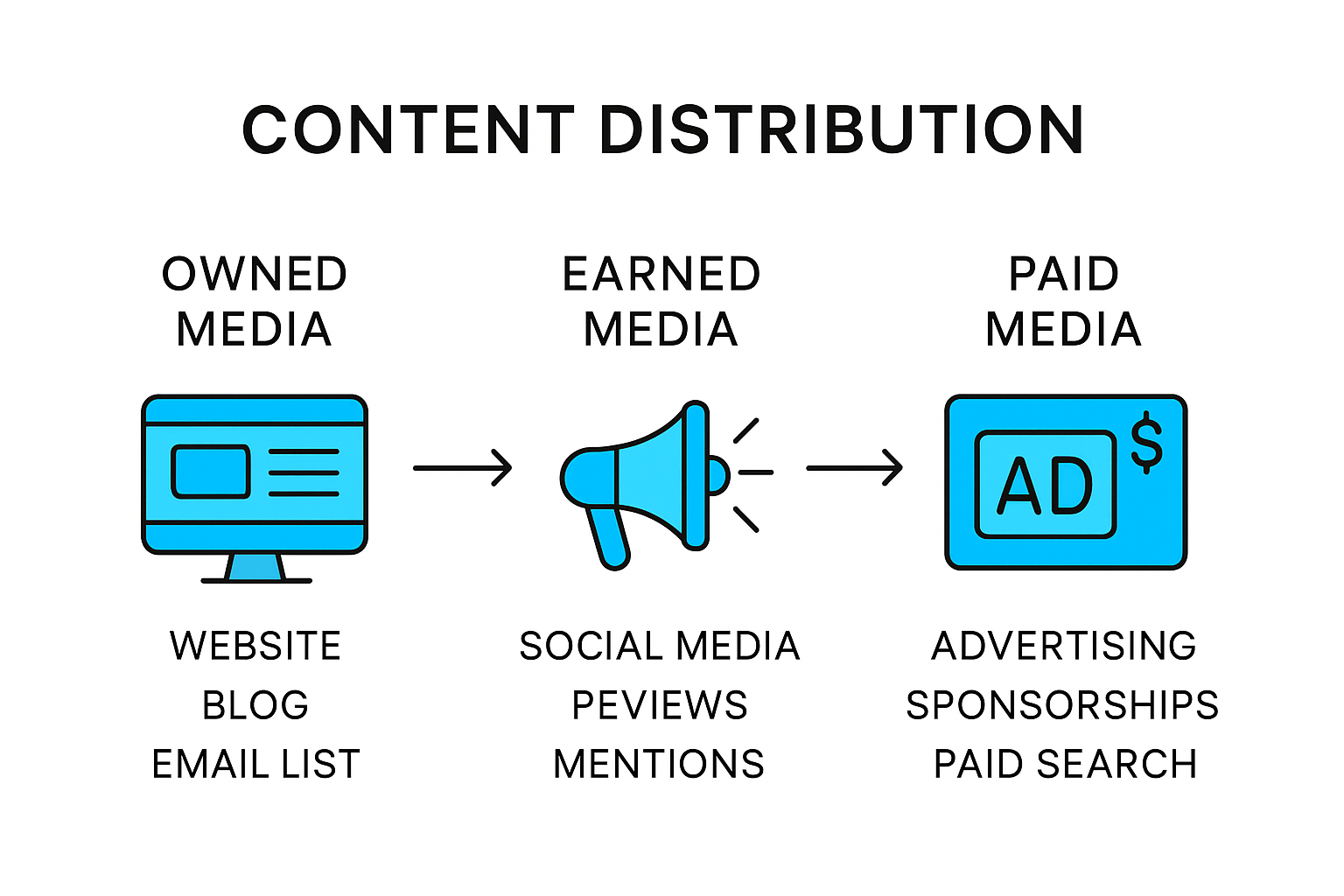
Effective content distribution requires a comprehensive approach that integrates owned, earned, and paid channels. Each channel offers unique opportunities to connect with different audience segments and amplify your content’s reach.
Owned channels include:
- Company website and blog
- Email newsletters
- Social media company profiles
- Internal communication platforms
Earned channels involve:
- Media mentions
- Guest posting opportunities
- Social media shares
- Influencer collaborations
Paid channels encompass:
- Sponsored social media posts
- Pay-per-click advertising
- Sponsored content
- Targeted display advertisements
Global enterprise marketers emphasize that planning content creation and distribution together significantly improves campaign effectiveness and cross-channel alignment.
Optimize Distribution with Advanced Technologies
Cutting-edge technologies are transforming content distribution, enabling more precise, personalized, and efficient strategies. AI-driven analytics, content delivery networks (CDNs), and real-time tracking platforms provide unprecedented insights and capabilities.
Key technological strategies include:
- Using AI to predict optimal posting times
- Implementing personalization algorithms
- Tracking content performance across platforms
- Automating content syndication
These technologies allow marketers to move beyond traditional distribution methods, creating more dynamic and responsive content strategies that adapt to audience behaviors in real-time.
Measure and Refine Distribution Performance
Successful content distribution is an iterative process that requires continuous monitoring and optimization. Establish clear metrics to evaluate your distribution strategy’s effectiveness, focusing on engagement, reach, and conversion rates.
Critical performance metrics include:
- Unique page views
- Time spent on content
- Social media shares
- Conversion rates
- Return on investment (ROI)
- Customer acquisition cost
Regularly analyze these metrics to identify what content resonates most with your audience and which distribution channels deliver the best results. This data-driven approach enables you to refine your strategy, allocate resources more effectively, and continuously improve your content marketing efforts.
Remember, effective content distribution is not about broadcasting your message everywhere, but strategically placing your content where it can create meaningful connections with your target audience. By combining multichannel strategies, leveraging advanced technologies, and maintaining a rigorous measurement approach, you can transform your content distribution from a passive activity to a dynamic, results-driven process.
Measure and Optimize Your Strategy
Measuring and optimizing your content marketing strategy is not just a final step, but a continuous process of refinement and improvement. Enterprise marketers recognize that tracking performance is crucial, with many seeking to understand their strategies through comprehensive metrics and data-driven insights.
Define and Track Critical Performance Metrics
Successful content marketing requires a holistic approach to measurement. Key performance indicators (KPIs) provide a comprehensive view of your content’s effectiveness across multiple dimensions. Research indicates that enterprise marketers are tracking up to 17 essential content marketing metrics to gain deeper audience understanding.
Essential metrics to monitor include:
- Engagement rates
- Conversion rates
- Time spent on page
- Social media shares
- Lead generation volume
- Return on investment (ROI)
- Customer acquisition cost
Don’t just collect data—interpret it. Each metric tells a story about how your audience interacts with your content and where opportunities for improvement exist.
Implement Advanced Tracking and Personalization
Cutting-edge research reveals that hyper-personalized content can increase engagement rates by 202%, with 80% of marketers reporting higher conversion rates through targeted strategies.
Advanced tracking tools offer unprecedented insights:
- Heat map analytics
- Session recording technologies
- User behavior tracking
- Interactive content measurement
- Audience segmentation analysis
These technologies enable marketers to understand not just what content performs, but why it resonates with specific audience segments. By mapping user interactions and preferences, you can create more targeted, effective content strategies.
Continuous Optimization and Iteration
Optimization is an ongoing journey, not a destination. The most successful content marketing strategies embrace a culture of continuous learning and adaptation. This means regularly:
- Reviewing performance metrics
- Identifying content gaps
- Experimenting with new formats
- Soliciting audience feedback
- Reallocating resources based on data insights
Don’t be afraid to pivot. If certain content types or distribution channels aren’t delivering expected results, use your metrics to guide strategic adjustments. The goal is to create a dynamic, responsive content marketing approach that evolves with your audience’s changing needs and preferences.
Remember, measurement isn’t about achieving perfection, but about understanding, learning, and continuously improving. By combining rigorous metrics, advanced tracking technologies, and a commitment to iteration, you’ll transform your content marketing from a static strategy to a powerful, adaptive engine of audience engagement and business growth.
Frequently Asked Questions
What are the key components of a successful content marketing strategy?
A successful content marketing strategy includes establishing clear business objectives, developing a targeted content strategy, creating compelling content, optimizing distribution methods, and continuously measuring and optimizing performance.
How can I measure the effectiveness of my content marketing efforts?
To measure the effectiveness of your content marketing, track key performance metrics such as engagement rates, conversion rates, social media shares, and return on investment (ROI). These metrics provide insights into how well your content resonates with your audience.
What is the role of technology in content marketing for 2025?
Technology plays a crucial role in content marketing by enhancing efficiency, enabling advanced tracking and personalization, and optimizing content distribution strategies. AI and analytics can provide insights into audience behavior, which helps create more effective content.
How important is audience targeting in content marketing?
Audience targeting is vital in content marketing, as it ensures that the content created resonates with your specific audience segments. Understanding your audience’s needs, preferences, and behaviors allows you to craft relevant and engaging materials that drive conversions.
Transform Your Content Strategy with Effortless Reporting
In your quest to master the 10 Powerful Content Marketing Strategies for 2025, you’ve learned the importance of establishing clear business objectives, creating compelling and engaging content, and continuously optimizing your strategy. Yet, as you elevate your game, a looming challenge remains: the daunting task of data reporting.
Imagine shifting your focus from painstaking data collection to creating impactful strategies that drive your business forward. Reportz.io is here to help you make that transformation. Our SaaS platform automates your reporting tasks, streamlining your processes so you can concentrate on what matters most—crafting narratives that engage and connect with your audience.
With customizable KPI dashboards that collate real-time performance metrics from multiple marketing channels, you’ll be equipped to visualize your success and optimize your campaigns effortlessly. Say goodbye to drowning in spreadsheets and hello to collecting insights that matter—all while sharing reports with clients or team members in under three minutes! Don’t let your content decisions be clouded by reporting overload.
Take the leap today and start simplifying your reporting process! Visit Reportz.io and discover how easy it can be to leverage your data for targeted engagement. It’s time to turn your content strategies into performance outcomes, and we’re here every step of the way. Why wait? Your next level of productivity starts now!