Social media analytics is reshaping the way businesses engage with their audiences. With 63.9% of the world’s population using social media, understanding this digital landscape is crucial for brands looking to thrive. But here’s the twist: many companies still treat social media as just another marketing channel, overlooking its deeper strategic value. In reality, social media analytics can transform raw data into incredibly powerful insights that drive real business results.
Table of Contents
- What Is Social Media Analytics
- Why Social Media Analytics Matters
- Key Social Media Analytics Metrics
- How To Do Social Media Analytics
- Choosing Social Media Analytic Tools
Quick Summary
| Takeaway | Explanation |
|---|---|
| Social media analytics is essential for strategic decision-making | It provides deep insights into user behavior and engagement, enabling businesses to align marketing efforts with broader business objectives. |
| Focus on key social media metrics | Prioritize awareness, engagement, and conversion metrics to evaluate digital performance and connect efforts to tangible business outcomes. |
| Establish a comprehensive analytics framework | Develop clear objectives, consistent tracking, and a robust selection of metrics tailored to specific business goals to maximize insights. |
| Select the right analytics tools | Choose tools that offer cross-platform compatibility, extensive metric tracking, and customizable reporting to drive meaningful insights and decisions. |
What is Social Media Analytics?
Social media analytics represents a sophisticated approach to understanding and leveraging the massive amounts of data generated across digital platforms. At its core, social media analytics transforms raw social media data into meaningful insights that businesses can use to make strategic decisions, improve marketing efforts, and enhance customer engagement.
Defining the Landscape of Social Media Analytics
Social media analytics goes far beyond simple metrics like likes and shares. It is a comprehensive process of collecting, analyzing, and interpreting data from social media platforms to understand complex patterns of user behavior, sentiment, and interaction. Research indicates that the global social media analytics market is projected to grow from USD 17.39 billion in 2025 to USD 51.25 billion by 2029, highlighting its increasing importance in business strategy.
The discipline encompasses multiple layers of data analysis, including:
- Descriptive Analytics: Understanding what has happened through basic metrics
- Diagnostic Analytics: Exploring why certain social media events occurred
- Predictive Analytics: Forecasting future trends and user behaviors
- Prescriptive Analytics: Recommending specific actions based on insights
Key Components and Business Applications
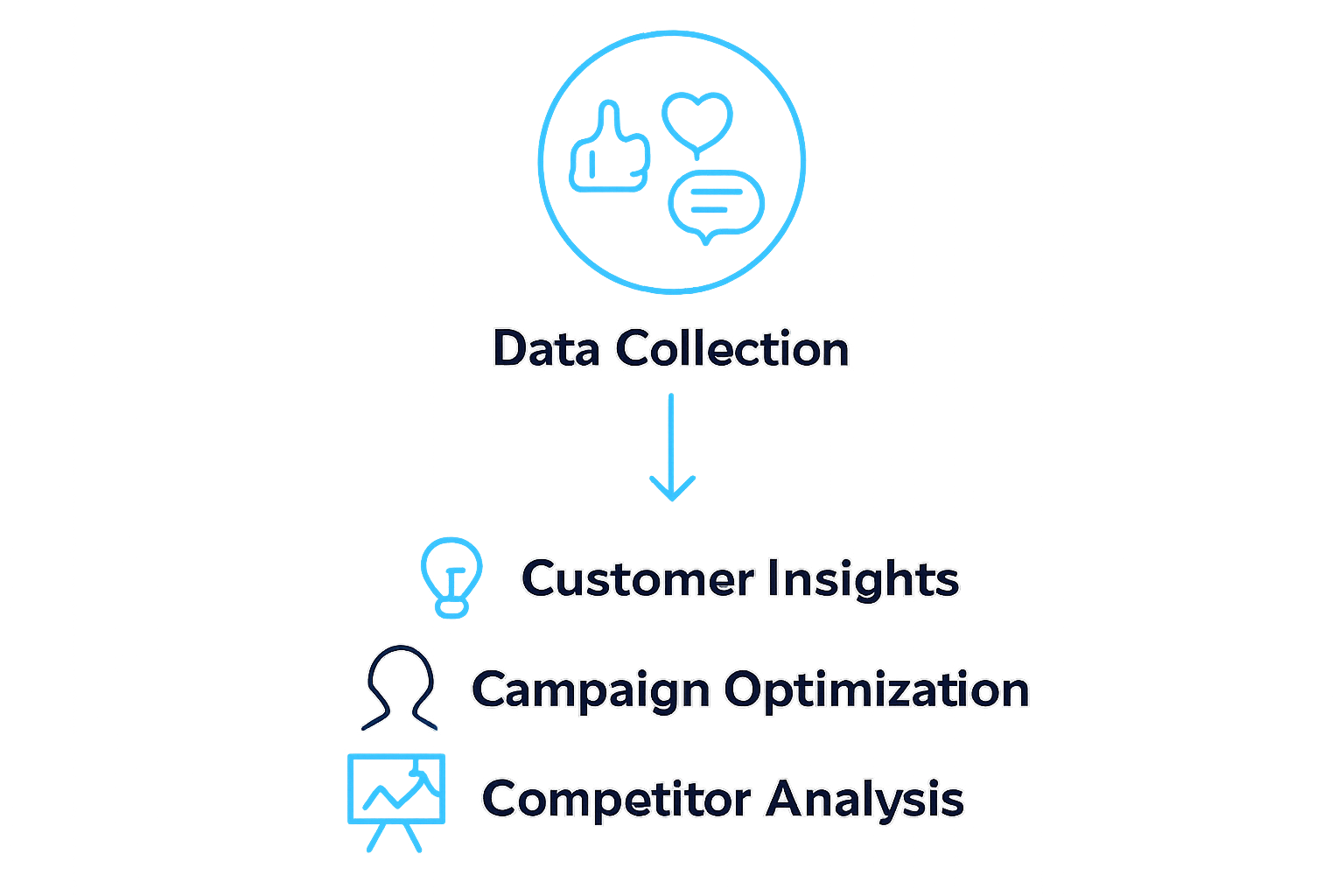
Businesses leverage social media analytics across various critical domains. Marketing teams use these insights to track campaign performance, understand audience demographics, and measure engagement rates. Customer service departments analyze sentiment and feedback to improve response strategies. Product development teams gain valuable insights into user preferences and potential improvement areas.
The comprehensive nature of social media analytics allows organizations to:
- Understand audience demographics and preferences
- Track brand sentiment and reputation
- Identify emerging trends and consumer behaviors
- Measure the effectiveness of marketing campaigns
- Detect potential customer service issues before they escalate
Technical Infrastructure and Tools
Modern social media analytics relies on advanced technologies including artificial intelligence, machine learning, and big data processing. Professional tools like Hootsuite Analytics, Sprout Social, and Brandwatch enable businesses to gather, process, and visualize complex social media data with unprecedented precision.
These platforms integrate data from multiple social channels, providing a holistic view of an organization’s digital presence. They offer real-time tracking, sentiment analysis, competitive benchmarking, and predictive modeling capabilities that transform raw social media data into actionable business intelligence.
As digital landscapes continue to evolve, social media analytics emerges as a critical tool for organizations seeking to understand, engage, and strategically respond to their digital audiences. By converting complex social interactions into clear, meaningful insights, businesses can make more informed decisions and stay ahead in an increasingly competitive digital ecosystem.
Why Social Media Analytics Matters
In today’s hyper-connected digital landscape, social media analytics has transformed from a nice-to-have tool to an essential strategic asset for businesses across industries. As digital interactions become increasingly complex, understanding the nuanced data behind social media engagement is no longer optional—it’s a critical competitive advantage.
Bridging Business Goals and Digital Performance
Social media analytics serves as a powerful bridge between marketing efforts and overarching business objectives. Research indicates that by connecting specific social media posts and campaigns to broader organizational goals, marketers can effectively demonstrate the tangible value of their digital strategies to key stakeholders.
Businesses now recognize that social media isn’t just about generating likes or followers, but about creating meaningful connections that drive real business outcomes. Analytics provides the critical lens through which companies can:
- Measure True Engagement: Move beyond surface-level metrics to understand genuine audience interaction
- Validate Marketing Investments: Directly correlate social media efforts with measurable business results
- Identify High-Performance Content: Understand precisely what resonates with target audiences
Strategic Decision Making Through Data Insights
Data-driven decision making has become the cornerstone of effective digital marketing. Social media analytics empowers organizations to make informed choices by revealing complex patterns of user behavior, sentiment, and interaction. Marketing teams can now:
- Detect performance declines in real-time
- Understand audience demographic shifts
- Predict emerging trends before they become mainstream
- Optimize content strategies based on empirical evidence

For instance, when a particular type of content consistently underperforms, analytics provides granular insights into why, enabling immediate strategic adjustments. This level of responsiveness was virtually impossible in traditional marketing environments.
Competitive Intelligence and Brand Positioning
Beyond internal performance tracking, social media analytics offers unprecedented competitive intelligence. By analyzing competitors’ social media strategies, engagement rates, and audience interactions, businesses can:
- Benchmark their performance against industry standards
- Identify gaps in their current marketing approaches
- Discover untapped market opportunities
- Understand broader industry trends
Tools like Sprout Social and Hootsuite enable sophisticated competitive analysis, allowing brands to stay agile and responsive in rapidly changing digital ecosystems.
As digital communication continues to evolve, social media analytics stands at the intersection of technology, marketing, and strategic planning. It transforms complex digital interactions into clear, actionable insights, enabling businesses to navigate the intricate world of online engagement with unprecedented precision and effectiveness.
Key Social Media Analytics Metrics
Navigating the complex world of social media analytics requires a deep understanding of the most critical metrics that provide meaningful insights into digital performance. Research from 2025 reveals that successful marketers focus on a strategic combination of metrics that go far beyond simple vanity measurements.
Awareness and Audience Growth Metrics
Awareness metrics serve as the foundation of social media analytics, helping businesses understand their digital reach and potential audience. Global social media usage data shows that 63.9% of the world’s population uses social media, making these metrics more crucial than ever.
Key awareness metrics include:
- Reach: Total number of unique users who have seen your content
- Follower Growth Rate: Percentage increase in your social media audience over time
- Impressions: Total number of times your content has been displayed
- Brand Mentions: Frequency and context of your brand being discussed online
These metrics provide a comprehensive view of your brand’s potential visibility and audience expansion opportunities. By tracking these indicators, businesses can understand their potential to connect with new audiences and measure the initial impact of their social media strategies.
Engagement and Performance Metrics
Engagement metrics dive deeper into how audiences interact with your content, moving beyond simple visibility to measure genuine audience interest and interaction. Industry experts highlight these as critical indicators of content effectiveness:
- Likes and Reactions: Basic indicators of content appreciation
- Comments: Depth of audience interaction and conversation generation
- Shares: Measure of content’s viral potential and audience relevance
- Click-through Rates: Percentage of viewers taking desired actions
- Engagement Rate: Comprehensive metric calculating interactions relative to total audience size
These metrics reveal not just how many people see your content, but how compelling and valuable they find it. A high engagement rate suggests that your content resonates deeply with your target audience, while low engagement might indicate a need for strategic content adjustments.
Conversion and ROI Metrics
Ultimately, social media analytics must connect digital efforts to tangible business outcomes. Conversion and Return on Investment (ROI) metrics translate social media performance into concrete business value:
- Conversion Rate: Percentage of social media interactions leading to desired actions
- Cost per Click: Financial efficiency of social media advertising
- Customer Acquisition Cost: Total expense of gaining a new customer through social channels
- Revenue Attributed to Social Media: Direct financial impact of social media efforts
These metrics bridge the gap between digital marketing activities and business objectives, providing leadership with clear evidence of social media’s strategic importance. By demonstrating direct financial connections, businesses can justify and optimize their social media investments.
As digital landscapes continue to evolve, mastering these key social media analytics metrics becomes essential. They transform raw data into strategic insights, enabling businesses to make informed decisions, optimize their digital strategies, and create more meaningful connections with their audiences.
How to Do Social Media Analytics
Conducting effective social media analytics requires a systematic approach that transforms raw data into actionable business insights. The process involves strategic planning, precise tool selection, and continuous optimization to ensure meaningful results.
Establishing a Comprehensive Analytics Framework
Research indicates that successful social media analytics goes beyond collecting basic metrics, requiring a structured methodology that captures both descriptive and outcome-driven data. Businesses must develop a robust framework that includes:
- Clear Objectives: Define specific, measurable goals for your social media analysis
- Platform-Specific Strategies: Recognize the unique analytics requirements for each social media platform
- Consistent Tracking: Establish regular monitoring and reporting schedules
- Comprehensive Metric Selection: Choose metrics that align with broader business objectives
Begin by identifying key performance indicators (KPIs) that directly relate to your business goals. These might include brand awareness, audience engagement, conversion rates, or customer sentiment.
Implementing Advanced Analytics Tools and Techniques
Modern social media analytics relies on sophisticated tools that provide deep insights and automated reporting. Professional platforms like Hootsuite Analytics, Sprout Social, and Google Analytics offer comprehensive solutions for tracking and interpreting social media performance.
Key steps in implementing effective social media analytics include:
- Connect all relevant social media accounts
- Set up custom dashboards for easy monitoring
- Configure automated reporting
- Integrate multiple data sources
- Utilize AI-powered insights and predictive analytics
Professional tools enable businesses to:
- Track real-time performance metrics
- Generate detailed comparative reports
- Identify emerging trends
- Benchmark against competitors
- Visualize complex data sets
Creating Actionable Insights and Reporting
Platform-specific reporting has become crucial in 2025, requiring marketers to develop nuanced approaches that go beyond surface-level data. Effective social media analytics reporting should:
- Compare performance across different platforms
- Analyze engagement rates and audience demographics
- Identify content that drives the most interaction
- Highlight areas for strategic improvement
- Provide clear, actionable recommendations
Develop a consistent reporting cadence—weekly, monthly, and quarterly reviews that track progress against established goals. Each report should not just present data, but tell a story about your social media performance, connecting metrics to broader business objectives.
The most successful organizations treat social media analytics as a continuous learning process. By consistently analyzing data, testing new strategies, and adapting to changing digital landscapes, businesses can transform social media from a marketing channel into a strategic intelligence tool that drives meaningful business outcomes.
Choosing Social Media Analytic Tools
Selecting the right social media analytics tool is a critical decision that can dramatically impact an organization’s digital strategy. With the landscape of social media constantly evolving, businesses must carefully evaluate tools that provide comprehensive, actionable insights across multiple platforms.
Key Considerations for Tool Selection
The 2025 Social Media Benchmarks Report highlights that effective analytics tools should offer robust tracking capabilities across multiple dimensions. When evaluating social media analytics solutions, organizations should consider several crucial factors:
- Cross-Platform Compatibility: Ability to integrate and analyze data from multiple social media channels
- Comprehensive Metric Tracking: Depth of available metrics beyond surface-level engagement
- Reporting Flexibility: Customizable reporting options
- User Interface: Ease of use and data visualization capabilities
- Pricing Structure: Cost-effectiveness and scalability
Businesses must move beyond simple vanity metrics and seek tools that provide deep, contextual insights into their social media performance. The right tool should transform raw data into strategic intelligence that drives meaningful business decisions.
Top Social Media Analytics Tools in 2025
As of May 2025, the leading social media analytics tools offer unique strengths for different business needs. Some standout options include:
-
- Pros: Comprehensive reporting, sentiment analysis, competitor benchmarking
- Best For: Medium to large businesses requiring detailed insights
- Key Features: Cross-platform analytics, advanced reporting, team collaboration tools
-
- Pros: Extensive platform support, scheduling capabilities
- Best For: Businesses needing comprehensive social media management
- Key Features: Content scheduling, team workflow management, basic analytics
-
- Pros: User-friendly interface, affordable pricing
- Best For: Small to medium businesses and individual creators
- Key Features: Simple analytics, content scheduling, team collaboration
Evaluating Tool Effectiveness
Choosing the right social media analytics tool requires a strategic approach. Experts recommend conducting a thorough evaluation process that includes:
- Defining specific business objectives
- Testing multiple tools through free trials
- Comparing feature sets against organizational needs
- Assessing integration capabilities with existing tech stack
- Considering long-term scalability
It’s crucial to remember that no single tool is perfect for every organization. The ideal solution depends on specific business goals, budget constraints, and the complexity of social media strategies.
Businesses should approach tool selection as an ongoing process. As social media platforms evolve and new technologies emerge, the most successful organizations will remain flexible, regularly reassessing their analytics tools to ensure they continue to provide maximum value and insights.
Ultimately, the right social media analytics tool is more than just a reporting mechanism—it’s a strategic partner that helps businesses understand their digital presence, optimize their content, and make data-driven decisions that drive meaningful business outcomes.
Frequently Asked Questions
What is social media analytics?
Social media analytics is the process of collecting, analyzing, and interpreting data from social media platforms to gain insights into user behavior, engagement, and trends. It helps businesses make informed decisions and improve their marketing strategies.
Why is social media analytics important for businesses?
Social media analytics is crucial as it helps businesses bridge the gap between marketing efforts and overall business goals, measure engagement and performance, optimize content strategies, and provide competitive intelligence for better brand positioning.
What are the key metrics to track in social media analytics?
Key metrics include awareness metrics (reach, follower growth rate), engagement metrics (likes, comments, shares), and conversion metrics (conversion rate, revenue attributed to social media). These metrics help evaluate the effectiveness of social media efforts.
How can businesses choose the right social media analytics tools?
When selecting social media analytics tools, businesses should consider factors like cross-platform compatibility, comprehensive metric tracking, reporting flexibility, user interface, and pricing structure. Testing tools through free trials can also help in making informed decisions.
Transform Your Social Media Analytics with Reportz.io
Navigating the complexities of social media analytics can feel overwhelming, especially when you’re striving to connect every engagement, conversion, and business goal. As highlighted in the Social Media Analytics Guide 2025, effectively analyzing data from various platforms not only enhances your marketing strategy but also requires a robust analytical framework that many marketers often lack.
Imagine reducing the time spent on data handling so you can focus on what truly matters—optimizing your strategies and engaging your audience. With Reportz.io, you can effortlessly create customizable KPI dashboards that aggregate data from multiple analytics tools in just three minutes. Our platform allows you to track vital metrics like reach, engagement, and conversion rates in real-time, ensuring you never miss a beat on your social media performance. Why juggle multiple spreadsheets when you can have everything streamlined in one user-friendly interface?
Experience the change today! Start your FREE trial at Reportz.io and unlock the power of seamless reporting. Don’t let valuable insights slip through the cracks—take control of your social media analytics and drive impactful results NOW!
Recommended Articles
- The Ultimate Report for E-commerce Clients – Reportz
- Cómo establecer KPI en 2025: Una guía clara, paso a paso – Reportz
- How Tailor-made Icons Streamlined UX and Helped Build a Recognizable Brand – Reportz
- 8 Common Mistakes to Avoid When Setting Up Your Advanced Analytics Dashboard – Reportz
- Navigating the World of Display Advertising Analytics: A Beginner’s Guide – Reportz